

Introduction to NVH and BSR
Noise, vibration, and harshness (NVH) are unwanted characteristics in a mechanical system. Buzz, squeak, and rattle (BSR) are from the relative motion between components that generate unpleasant noise or vibration for an end user. NVH and BSR can wear down mechanical and bonded joints and mating surfaces or negatively impact customer satisfaction with unwanted noise.
Continue reading to learn more about NVH and BSR, the impact, and how engineers identify and resolve NVH and BSR issues.
What is NVH (Noise, Vibration, Harshness)?
Noise:
Acoustic energy produced by a mechanical system, typically measured in decibels (dB).Vibration:
Mechanical oscillation of structures and components, typically measured in Hertz (Hz) or acceleration (g).Harshness:
Subjective perception of how aggressive or rough a system’s sound or feel is to the user.What Does NVH Mean in Engineering?
Noise, vibration, and harshness, also known as NVH, refers to the quantitative and qualitative analysis of how dynamic systems generate, transmit, and present sound and vibration. NVH encompasses mechanical dynamics, acoustics, materials science, and human perception, to optimize machines’ vibroacoustic properties for maximum consumer comfort and product quality.What is BSR (Buzz, Squeak, Rattle)?
Buzz:
Caused by loose components vibrating at high frequency.Squeak:
Generated by friction between two surfaces under relative motion.Rattle:
Results from impacts between components with clearance or play.Understanding BSR: Buzz, Squeak, and Rattle Explained
BSR refers to unintended and intermittent noises created by component contact due to tolerance variation, material wear, or insufficient damping. It is most commonly found in vehicle interiors, consumer electronics, and assembled plastic parts.What is the Difference Between NVH and BSR?
NVH is a broad term that describes overall sound and vibration behavior in a machine and focuses on predictable or continuous sounds and vibrations generated during operation.
As a subsect of NVH, BSR targets non-structural or low-frequency acoustic disturbances. These are usually intermittent, and result from fit-and-finish problems, loose fasteners, or material friction.
Why NVH and BSR Matter in Product Design
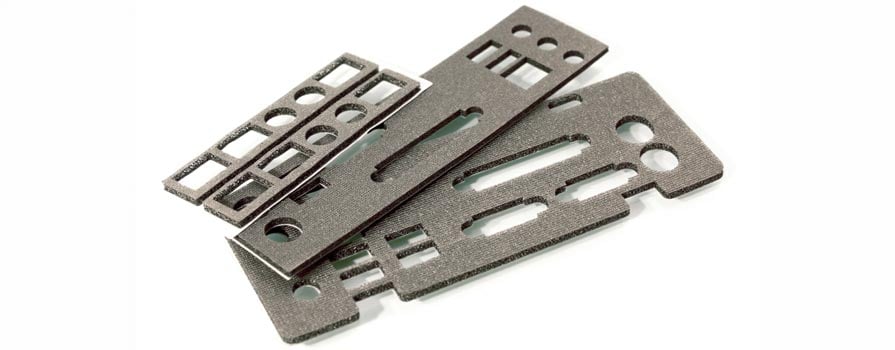
NVH affects durability, energy efficiency, safety, and perceived quality of machine design. To predict and mitigate NVH issues during early design stages, engineers use model analysis, finite element analysis (FEA), and acoustic simulations. BSR is critical in fit-and-finish validation, especially in products with tight assembly tolerances and high consumer expectations. Engineers address BSR using tribology principles, damping materials, adhesives, gaskets, and improved fastening designs.NVH Testing and Analysis Methods
Acoustic Testing measures how loud a component or system identifies the frequencies of the sound. Using microphones or microphone arrays, anechoic rooms or semi-anechoic chambers, or the FFT (Fast Fourier Transform) algorithm to break noise into frequencies, engineers locate areas exuding wind noise, engine/motor noise, whining, humming, and air leaks.
Vibration Testing measures how much a structure or component vibrates and at which frequency. Engineers place accelerometers on components, apply controlled vibration with shaker tables, or use sine sweeps or random vibration tests. These tests find loose components, resonances, drivetrain vibration, and imbalance.
Modal Analysis measures how a structure naturally vibrates by analyzing its natural frequencies, mode shapes, and damping. Using impact hammers, laser vibrometers, or animated diagrams, engineers identify panel vibrations, buzzing surfaces, and structural weak points.
Transfer Path Analysis (TPA) measures where a noise or vibration originates and how it travels through a structure. By measuring forces and vibrations at mounts or interfaces and tracing them from source through the structure and to receiver, engineers rank the strongest vibration/noise paths, pinpointing the main contributors to NVH.
Order Tracking Analysis measures noise and vibration from rotating parts relative to their speed. Using tools such as a tachometer to measure rotational speed, engineers detect gear whine, EV motor whine, shaft imbalance, and bearing issues.
Road Load Data Acquisition (RLDA) measures real-world vehicle load and vibration during system operation through sensors on wheels, suspension, engine, and the body, along with microphones inside the cabin while driving on different road types. These tests show how the system behaves on real surfaces, including road noise, impact harshness, and cabin noise.
NVH analysis also includes software simulations. For example, Finite Element Analysis (FEA) predicts structural vibration and mode shapes before building prototypes. The Boundary Element Method (BEM) simulates sound radiation from surfaces into air, and Multi-Body Dynamics (MBD) simulates system movement to predict vibration issues.
NVH Reduction Techniques and Materials
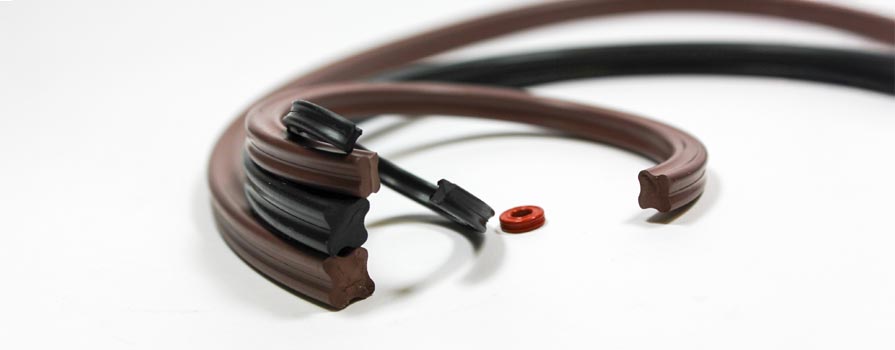
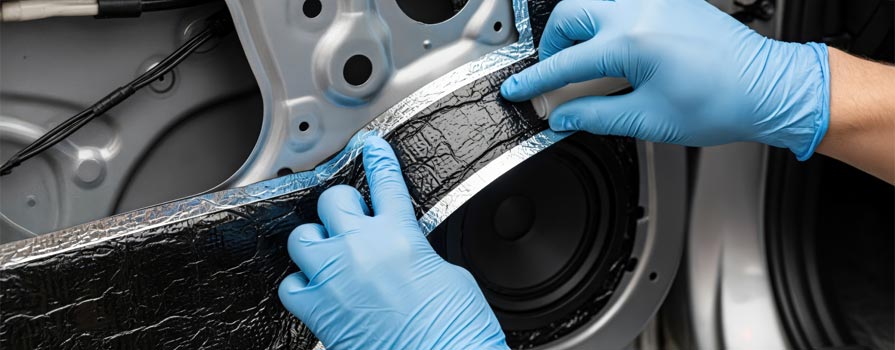
NVH reduction relies on three main engineering technique types – dampers, isolators, and absorbers and barriers. Dampers, such as viscoelastic pads, convert vibration into heat to reduce its impact. Isolators, such as rubber mounts, bushings, and grommets, prevent vibrations from spreading between components. Absorbers and barriers manage airborne noise and block unwanted noise. Absorbers include materials like acoustic foams and fiberglass, while barriers use mass-loaded vinyl and dense composite mats.Advanced Vibration Damping and Acoustic Insulation Solutions
By optimizing engineered materials and smart technologies, advanced acoustic insulation solutions control noise and vibration more effectively than standard foams and rubber mounts. Vibration damping includes methods such as constrained layer damping (CLD), which sandwiches a viscoelastic layer between rigid panels to absorb energy, or tuned mass dampers (TMDs) that counteract specific resonant frequencies. Other high-performance options include particle damping, adaptive magnetorheological (MR) and electrorheological (ER) fluid dampers, and active piezoelectric systems; all designed efficiently to cancel or dissipate vibration energy.
Collaborate with Boyd for NVH and BSR solutions. Our experts leverage decades of material science expertise and advanced engineering techniques to reduce noise, vibration, and rattles, helping your products deliver superior performance and quality.