

What are EMI and RFI in Data Centers?
Electromagnetic Interference (EMI) is an unwanted electrical noise generated by equipment such as servers, power supplies, UPS systems, PDUs, and cooling motors in modern data centers. As compute density increases, unmanaged EMI degrades signal integrity across critical IT infrastructure. Radio Frequency Interference (RFI) is a subset of EMI that occurs at radio frequencies, often affecting wireless systems, networking equipment, and sensitive monitoring devices within data center environments. In high-density data centers, EMI and RFI corrupt high-speed signals, increase bit error rates (BER), and disrupt wireless telemetry, IoT sensors, and security systems. These challenges drive the need for EMI and RFI shielding materials for data centers to maintain signal integrity and operational stability. Even small interference issues can cascade into uptime, reliability, and regulatory compliance risks.How Does EMI and RF Shielding Work?
Reflection (Blocking): Conductive materials like copper, aluminum, and steel reflect electromagnetic waves, preventing EMI and RFI from entering or exiting sensitive equipment enclosures. This mechanism is especially effective for high-frequency interference commonly found in dense data center environments.
Absorption: Materials such as conductive foams and conductive elastomer gaskets absorb electromagnetic energy and convert it into heat, reducing reflected interference within an enclosure. These materials are commonly used as EMI absorption material for servers, especially where reflection alone is insufficient.
Grounding: Shielding components must be properly grounded to safely dissipate interference energy and maintain shielding effectiveness. In data centers, grounding paths are integrated into racks, cabinets, and enclosures to ensure EMI and RFI are directed away from sensitive electronics.
Together, these shielding mechanisms reduce electromagnetic coupling between noisy equipment and EMI-susceptible electronics, helping preserve signal integrity in high-density data centers.
Where is Shielding Used in Data Centers?
Server racks and cabinets are typically constructed from metal and act as partial Faraday cages, limiting the spread of EMI between densely packed systems. Shielded doors, panels, and seams reduce leakage, while EMI gaskets seal gaps where enclosures components meet.
Cables and interconnects use shielding to protect high-speed data signals from external electromagnetic noise while containing emissions generated during transmission. Proper grounding and termination prevent crosstalk and help preserve signal integrity in dense cabling environments.
Power distribution equipment is often enclosed in shielded housings or physically isolated to prevent strong electromagnetic fields from affecting nearby IT hardware. This separation helps protect sensitive systems from interference generated by high-current power components.
Rooms and zones within high-security or mission-critical data center environments are sometimes fully shielded to control electromagnetic interference at a facility level. This approach also prevents signal leakage and supports regulatory compliance and data security requirements.
Materials Used for EMI and RF Shielding in Data Centers
Engineered materials are essential for data centers to balance EMI and RFI shielding effectiveness, with airflow, weight, and serviceability requirements. Selecting the right materials helps maintain performance without compromising thermal management.
Metals, such as aluminum, copper, and steel are the primary EMI and RFI shielding materials for data centers due to their high electrical conductivity. These materials are commonly used in server racks, cabinets, enclosures, and panels to reflect electromagnetic energy and prevent interference from entering or leaving sensitive equipment.
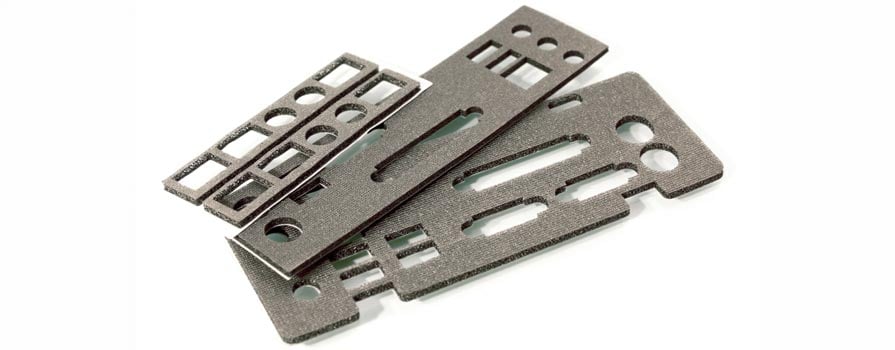
Conductive foams are used to address gaps and seams around doors, access panels, and joints that can allow electromagnetic energy to leak. These materials compress to maintain electrical contact between surfaces, making them effective EMI absorption materials for servers without blocking airflow, which is critical for thermal performance.
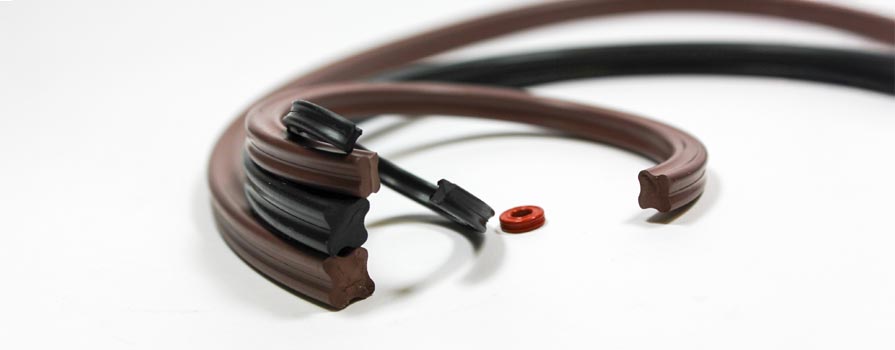
Conductive elastomer gaskets serve a similar purpose to foams but are used in applications requiring greater durability, environmental sealing, and repeated access. Made from elastomeric materials infused with conductive particles, these gaskets maintain electrical continuity while sealing against dust, moisture, vibration, and mechanical wear.
Shielded coatings, films, and laminates are used where solid metal structures are impractical due to space, weight, or design constraints. Conductive coatings are directly applied to plastic housings, while films and laminates are layered into panels or bonded with adhesives to create thin, lightweight shielding solutions that meet performance requirements.
Flame Retardant – Vertical, Level 0 (FR-V0) materials are designed to resist ignition and rapidly self-extinguish when exposed to flame. In dense, high-power compute environments, FR-V0 rated materials help reduce fire propagation risks while maintaining dimensional and dielectric stability at high data rates.
Why Partner with Boyd for EMI and RFI Shielding Solutions
With decades of experience with engineered materials and precision converting, Boyd helps data center operators and OEMs protect signal integrity in increasingly dense, high-performance environments. Our expertise in EMI and RFI shielding materials for data centers, including absorption materials, gaskets, coatings, and custom-engineered solutions, enables reliable, compliant, and scalable infrastructure.
By partnering with Boyd, customers gain a single, trusted expert to design, manufacture, and integrate shielding solutions that support uptime, performance, and long-term operational confidence. Contact our experts to discuss custom solutions for your EMI and RF shielding needs.