





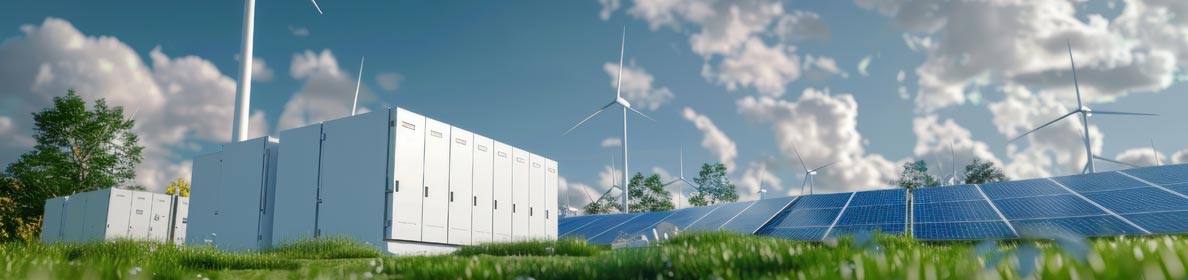
Energy Technology Solutions
Battery energy storage systems (BESS) store electricity and deliver it when generation and demand do not align. These stationary energy storage systems integrate rechargeable battery cells and modules with power conversion, controls, thermal management, and protective enclosures. BESS supports renewable energy integration, grid balancing, peak-demand management, backup power, microgrids, and resilient EV charging infrastructure. As electrification increases power demand across transportation, buildings, connected devices, and data-intensive infrastructure, reliable energy storage becomes increasingly important. Boyd combines engineered materials, thermal management, and precision manufacturing to help protect critical BESS interfaces from heat, electrical faults, environmental exposure, vibration, and mechanical stress—supporting safer, more reliable energy technology solutions.
Streamlined, Multi-Functional Solutions

Quick Design Cycles and Fast Prototyping

Greater Design Flexibility
What Are Energy Technologies and Why Do They Matter?
Battery energy storage systems (BESS) are central to modern energy infrastructure, storing electricity for use when generation and demand do not align. They support renewable energy integration, peak demand management, backup power, microgrids, and grid resilience. These systems depend on reliable protection for cells, modules, racks, power electronics, and enclosures. Boyd combines engineered materials and advanced manufacturing to address critical BESS interfaces while supporting the wider energy ecosystem. Related solutions help protect renewable energy equipment, power generation and distribution systems, microgrids, and EV charging infrastructure from heat, electrical faults, environmental exposure, vibration, and mechanical stress.Energy Technology Applications
Boyd supports energy generation, conversion, distribution, storage, and charging applications with engineered materials. Key applications include battery energy storage systems, renewable power equipment, microgrids, power electronics, grid infrastructure, and EV charging systems. BESS remains a primary focus because it connects renewable generation, resilient power, and reliable energy delivery.Why Boyd for Battery Solutions?

Our lightweight, high performance sealing solutions help you design larger batteries with greater power density.

We ruggedize batteries to withstand harsh environmental and road conditions for energy storage and EV batteries with extended life and range.

We design solutions for simplified customer assembly, design for manufacturing (DFM) throughput, and material optimization.
The Boyd Difference for an EV Battery Pack
We know safety and reliability. We’re also experts at maximizing power density, energy utilization, recovery, and efficiency in applications. We’ve proven reliability and safety are at the forefront of our design and manufacturing support for transportation, aerospace, and defense markets for over 60 years, driving innovation to make our technologies lighter and more compact. And we’re blending this heritage with innovative manufacturing processes, materials, and technologies from our experience in advanced industries to enhance EV battery pack component design and technology safely and efficiently.Top Three Causes of Thermal Runaway and How to Prevent Them
View transcript
Maximize BESS Performance with Boyd’s Sealing Technologies
(View transcript)
Boyd’s Battery Heritage
- Proven experience producing high-volume battery sealing and protection components
- 2 million + eMobility battery component installations
- More than 60 years of field-proven performance and over 1 billion units shipped in transportation, aerospace, and defense applications for trusted reliability in markets where safety is a key concern.
Ruggedize BESS Enclosures for Demanding Environments
Battery energy storage systems may operate outdoors, in industrial facilities, at renewable generation sites, or in remote locations. Enclosures must withstand rain, dust, humidity, temperature cycling, UV exposure, vibration, and repeated service access. Custom perimeter seals and gaskets, or enclosure seals or housing gaskets, protect cabinet doors, lids, access panels, and service interfaces against environmental ingress while supporting compression-set requirements, enclosure tolerances, and maintainability.EV Batteries and Energy Storage Resources


Manage Cell Swelling and Stack Pressure with Compression Pads
Prismatic cells expand and contract through charge cycling and aging. Without controlled compression, dimensional change can create uneven stack pressure, mechanical stress, and movement within the module. Boyd compression pads fit between prismatic cells to accommodate swelling, manage tolerance variation, maintain targeted stack pressure, and cushion vibration. Pads can be engineered for thickness, force-deflection behavior, compression set, and integration with adjacent dielectric or thermal-barrier layers.

Electrical Isolation Across the BESS Assembly
Dielectric films and barriers electrically isolate cell faces, module covers, busbars, and enclosure clearances without consuming unnecessary space. Custom electrical insulators protect terminals, support busbars, and isolate fasteners to maintain critical clearances and reduce the risk of shorts or arcing. Converted components can combine films, adhesives, and cushioning layers for reliable placement and simplified assembly.Control Heat, Ejecta, and Propagation with Integrated Barriers
A layered protection strategy helps manage the consequences of a cell failure. Thermal barriers between cells or modules slow heat transfer and propagation. Blast barriers positioned above cell vents help retain fragments and redirect hot ejecta toward intended vent paths. Insulation blankets under lids and near vent-facing zones provide transient heat shielding for enclosure surfaces, electronics, and adjacent modules. Material selection and placement should align with cell format, vent direction, electrical clearances, enclosure architecture, and qualification requirements.
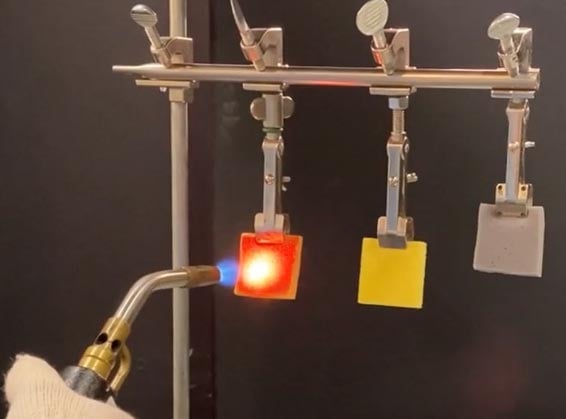
SOLIMIDE® Battery Insulation and Protection
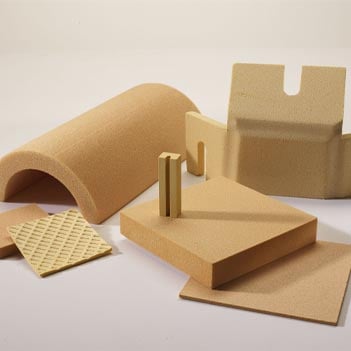
SOLIMIDE® is a fire resistant, ultra-lightweight, non-toxic foam that can maintain peak performance at both high and low temperature extremes. It is exceptionally flame resistant and used as a flame barrier in many critical applications. SOLIMIDE® will not ignite or combust under continuous long term direct exposure to flame, emits zero toxins and very little smoke. It offers traditional foam performance characteristics like compressibility and vibration damping. It’s also non-wicking with high hydrolytic stability, meaning it won’t retain water or water weight and can withstand long exposure to liquids. When applied in a battery pack, it acts as secondary fire protection at the battery pack level, isolating flame and fire while absorbing both mechanical vibration and acoustics for safer, quieter, more reliable batteries.
Preventing Li-ion Battery Thermal Runaway
Good temperature management of lithium-ion battery cells with additional back up safety features help to prevent battery thermal runaway events or respond safely and swiftly if they occur. Thermal runaway prevention starts with optimized design but also requires components that protect against thermal runaway propagation. Multi-functional, complex battery component solutions designed for cell-to-cell application absorb impact, vibration and movement, dissipate cell heat, and act a flame or heat barrier and isolator if a catastrophic event were to occur. Enable your designs to proactively and safely prevent thermal runaway events by managing vibration, movement and friction, and quickly isolate extreme heat or fire in the unlikely event battery safety design features fail to prevent cell-to-cell propagation. Highly integrated thermal runaway prevention assemblies feature heat spreaders with compression pads and flame-rated electrical insulation to isolate li-ion battery cells. Prevent, protect, and isolate battery storage thermal runaway and EV battery thermal runaway.

Ruggedize Batteries to Withstand Environmental Exposure
(View transcript)
How to Protect EV Batteries Against Collision and Thermal Runaway
(View transcript)
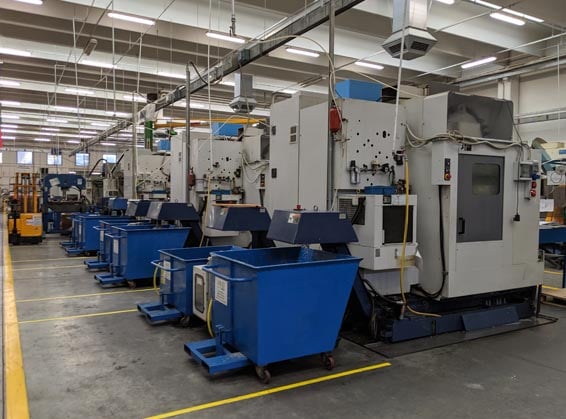
Global Network & Local Support
Boyd maintains nearly 20 ISO 9001 and nine multiple IATF 16949 certified manufacturing operations across three continents to assure our energy storage and eMobility components exceed the rigorous demands for quality management systems with adept regional support. Boyd’s customer focus and relationship management culture are aligned with the most demanding QMS system processes. By optimizing processes, organization, and efficiency, we reduce costs and increase yield rates with effective management and assembly processes, all while providing our customers with the highest quality products.Solve Sustainability Regulations of the Future
Boyd’s globally available, in-region ISO 14001 certified manufacturing operations and longstanding partnerships with eMobility, electric vehicle, hybrid electric vehicle, autonomy, and energy storage innovators influence how we exceed rigorous safety and regional environmental requirements, anticipate evolving consumer needs, and solve sustainability regulations of the future.

Trusted Innovation in eMobility | EV Battery Thermal Runaway Solutions
eMobility Solutions | EV Thermal Runaway Protection |EV HMI Technology
Benefits of EV Batteries and Energy Storage:
Collect energy for rapid battery charging for electric vehicles.
Purchase energy at lower demand times for better pricing.
Store energy for emergency consumption, especially for critical locations and systems like hospitals and data centers.
Improves the reliability of power production of sustainable sources like wind farms or solar farms.
Balance grid production and demand, especially during peak operating hours.
EV Batteries and Energy Storage Challenges:
Supporting equipment and protective materials reduce available volume for battery cells and reduces energy density.
Renewable on-site energy storage systems are located at solar or wind farms, which can be in remote locations. This can limit system maintenance and requires highly reliable systems for ongoing usage.
EV batteries must meet demanding safety standards for passenger safety, which includes collision protection and fire-resistant materials to increase egress time in emergencies.
Every gram counts in extending EV battery range, so protection must use lightweight, yet reliable solutions.
Leverage Boyd’s 15+ years of battery expertise to enhance your product.
Key Battery and Energy Terms to Know

| Term | Definition |
|---|---|
| Seals and Gaskets | Seal battery packs, battery modules, and battery covers against temperature impact, air, dust and water ingress. Optimize performance, waterproof and seal while considering compression set and force deflection, NVH and other mechanical factors. |
| Venting Films and Seals | Control internal battery assembly or pack pressure, moisture, and other environmental factors. |
| EMI Shielding | Reduce electronic malfunction susceptibility in battery packs and modules by blocking unwanted external electromagnetic waves. |
| Multilayer Thermal Runaway Protection | High temperature, fire resistant foams and films to shield, block and suppress flame between battery cells and modules. |
| Compression and Tolerance Pads | Manage expansion and contraction of battery cell tolerance stack and temperature cycling. |
| Electrical Insulation and Cell Wrapping | Insulation layers wrap battery cells and modules to prevent spark voltage between internal critical components that can lead to device shorting or fire. |
| Dielectric Adhesives for Busbars | Protect flexible printed circuits in battery assemblies to extend device lifetimes. |
| Thermal Interface Materials (TIMs) | Facilitate heat transfer between the cooling plate and battery module, moving heat away from sensitive components. TIM helps to minimize resistance of heat flow into, through and out of an interface. |
| Cell-to-Cell Bonding | Pressure Sensitive Adhesives bond pouch and prismatic cells together to enhance structural integrity in Battery pack assemblies. |
Energy Technology and BESS FAQs
What is a battery energy storage system (BESS)?
A battery energy storage system (BESS) stores electrical energy in rechargeable batteries and delivers it when needed. A typical BESS integrates battery cells and modules with power conversion, thermal management, controls, and protective enclosures to support renewable energy integration, peak-demand management, backup power, microgrids, and grid resilience.Are there eco-friendly battery cooling solutions?
Yes. More sustainable battery cooling solutions can improve energy efficiency, optimize material use, and support longer system life. Thermal interface materials transfer heat from battery cells or modules to cooling plates, while lightweight insulation and integrated components can reduce part count and material waste. The right approach depends on the battery architecture, operating environment, cooling requirements, and performance targets.What role does cooling play in battery safety?
Cooling helps maintain battery cells and modules within their specified temperature range, reducing overheating and temperature gradients that can degrade performance and increase thermal-runaway risk. Effective thermal management supports safer, more reliable operation across changing loads and environmental conditions, but it is one part of a broader battery safety strategy.What protection materials are commonly used in a BESS?
Common BESS protection materials include environmental seals that limit dust and moisture ingress; dielectric films and electrical insulators that maintain electrical isolation; compression pads that manage cell swelling and stack pressure; thermal interface materials that transfer heat to cooling systems; and thermal barriers, blast barriers, and insulation blankets that help manage heat, fragments, hot ejecta, and propagation during a thermal event.How do environmental seals protect a BESS enclosure?
Environmental seals protect a BESS enclosure by limiting the ingress of dust, moisture, and contaminants that can compromise reliability. Custom foam or rubber gaskets seal cabinet doors, lids, access panels, and service interfaces while accommodating enclosure tolerances, compression requirements, and repeated opening during maintenance.What is the difference between a thermal barrier and a blast barrier?
A thermal barrier is positioned between cells or modules to slow heat transfer and help limit thermal runaway propagation. A blast barrier is typically positioned near or above cell vents to help retain fragments and redirect hot ejecta along engineered vent paths, away from adjacent cells and sensitive equipment.What do thermal interface materials do in a BESS?
Thermal interface materials (TIMs) fill air gaps between a battery cell or module base and a cooling plate. By conforming to surface irregularities and reducing thermal contact resistance, they improve heat transfer into the cooling system and support more consistent battery temperatures.How do dielectric films and electrical insulators improve BESS safety?
Dielectric films and custom electrical insulators create electrical separation around cell faces, module covers, terminals, busbars, fasteners, and enclosure clearances. They help maintain required clearances and reduce the risk of short circuits or arcing while using minimal space within the BESS assembly.How do engineered materials help protect a BESS from thermal runaway?
Engineered materials help protect a BESS from thermal runaway through prevention, containment, and propagation control. Dielectric films and electrical insulators help prevent electrical faults. Compression pads manage cell movement and stack pressure. Thermal barriers slow heat transfer between cells or modules, blast barriers help contain fragments and redirect hot ejecta, and insulation blankets shield nearby enclosure surfaces and components.What factors should be considered when selecting BESS protection materials?
BESS protection material selection should account for the battery design, operating environment, integration needs, and validation requirements. Key factors include cell format, vent direction, electrical clearances, enclosure architecture, environmental exposure, operating temperature, dimensional tolerances, service access, attachment methods, and qualification requirements.Can multiple BESS protection functions be combined into one component?
Yes. Depending on performance requirements and component architecture, a converted multilayer component can combine sealing, electrical isolation, cushioning, insulation, and thermal-management functions. Boyd integrates films, foams, adhesives, elastomers, and insulation to reduce part count, support consistent placement, and simplify BESS assembly.Why are compression pads used between prismatic battery cells?
Compression pads are placed between prismatic battery cells to accommodate cell swelling, maintain targeted stack pressure, absorb dimensional tolerance variation, and reduce mechanical stress throughout charge cycling and aging. These functions help support stable cell positioning and reliable module performance over time.Build Safer, More Reliable Energy Systems with Boyd
Build safer, more reliable energy systems with proven expertise: more than 1 million EV battery seals installed in today’s leading electric vehicles and more than 2 million eMobility battery component installations. Benefit from more than 60 years of field-proven performance and over 1 billion units shipped across transportation, aerospace, and defense applications—experience that supports trusted reliability where safety is critical. Partner with Boyd to simplify assembly, protect critical interfaces, and accelerate the development of dependable energy technologies from component to system.



Have questions? We’re ready to help!